Community history
Who shaped this neighborhood?
Trace changing land use, migration, local institutions, and community organizations through maps, directories, photographs, and oral histories.
American history is shaped by communities whose experiences do not always appear in a single textbook. Follow civic movements, work, migration, military service, innovation, and local memory through multiple kinds of sources.
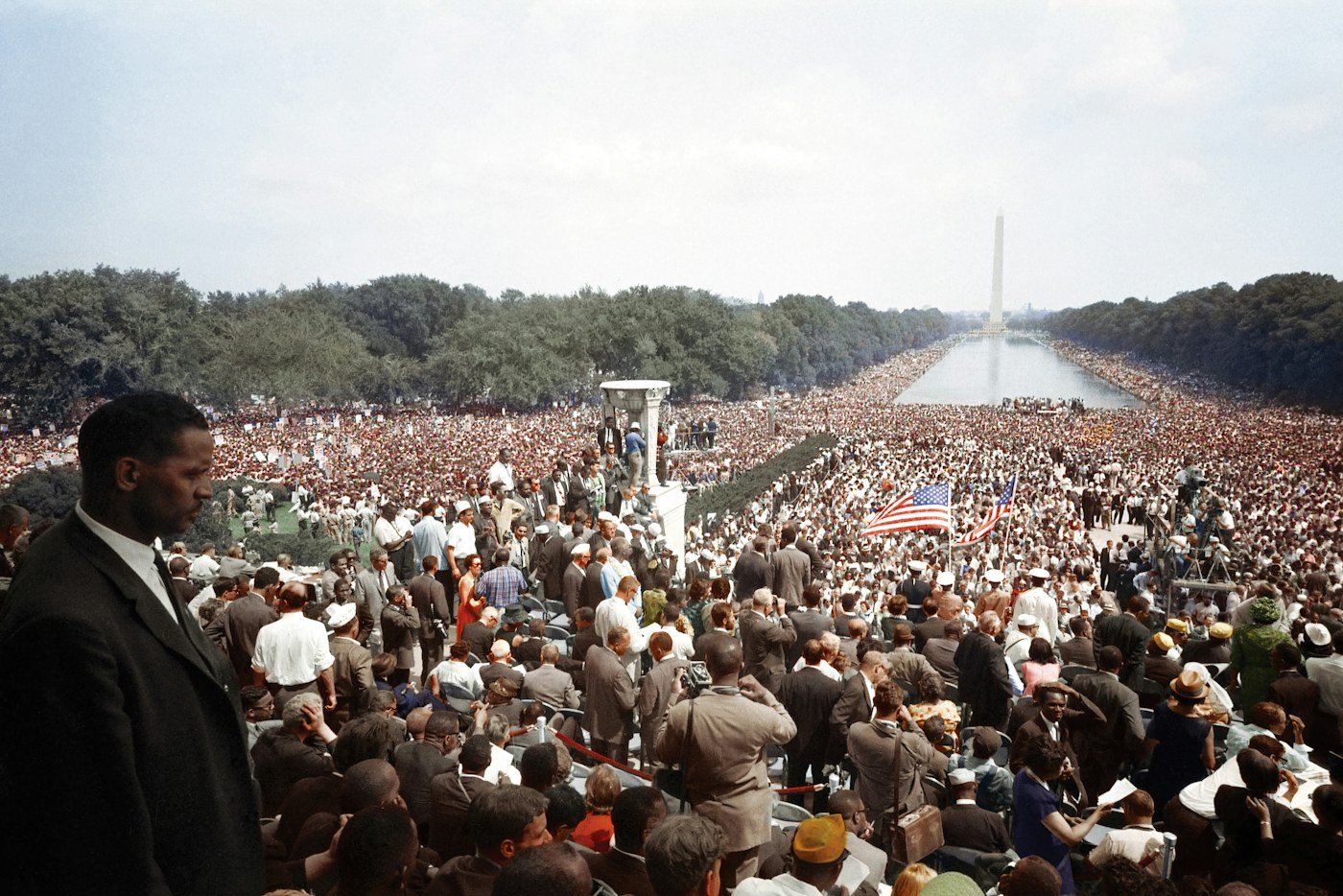
The 1963 March on Washington for Jobs and Freedom brought a large coalition to the nation’s capital. Photographs, speeches, planning documents, newspapers, and memories each preserve different parts of the event. Reading them together helps explain how participants organized, what they demanded, and how the march has been remembered since.
Historical photographs need captions and source information. A picture can document a moment, but it does not explain every person’s perspective or the full context around the scene.
Use these paths to explore the people and decisions that shape shared history.
Trace changing land use, migration, local institutions, and community organizations through maps, directories, photographs, and oral histories.
Look at meeting records, flyers, letters, testimony, and the places where public action unfolded.
Objects, tools, time records, and workplace photographs help connect technological change with lived experience.
Monuments and anniversaries reveal how public memory develops—and how it can be questioned or revised.